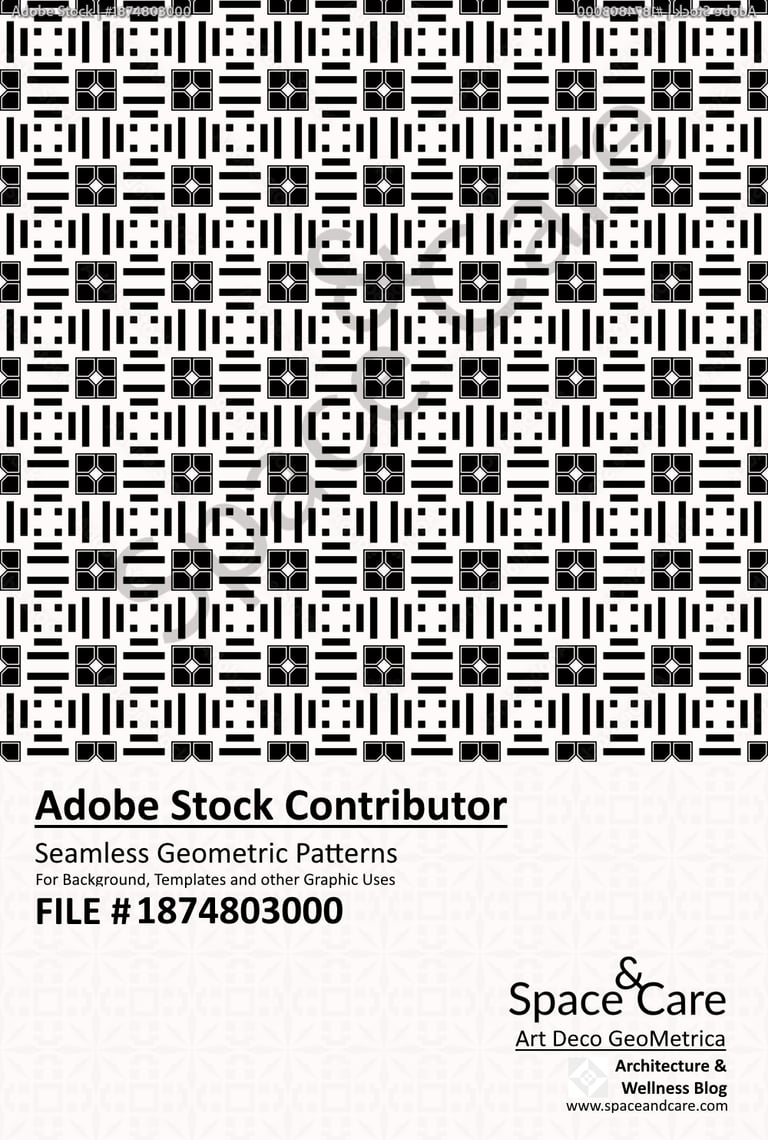
Art Deco Geometrica: On Emergence
Whenever I make patterns for Art Deco Geometrica, I am always surprised by the new patterns that come out when the designs come together. Emergence happens in art, but also in different disciplines, including architecture.
SPACEART
Richard Lasam
1/27/20262 min read

I have always been fascinated by symmetrical patterns. Even more so now that I have gone back to having a hobby of drawing geometric patterns. Symmetry is something that gives me a great sense of beauty and balance. Most of my architectural projects often follow this design philosophy actually; I find that having a base symmetry in the plan creates a harmonious flow in the overall activity level of a space.
This is the reason most of the patterns I do are done in a square grid: I enjoy creating symmetrical formations and geometry and letting the patterns form itself so to speak. The patterns all start as drawn and drafted works on paper, and then later I encode them into a digitized form via architectural computer programs. You can see these digital patterns in my adobe stock page if you like, but what I want to talk about here in this post is that I realized I discovered that the patterns I make have achieved emergence in some cases.
Emergence
Emergence is an idea “[i]n philosophy, systems theory, science, and art, …[that] occurs when a complex entity has properties or behaviors that its parts do not have on their own, and emerge only when they interact in a wider whole.”
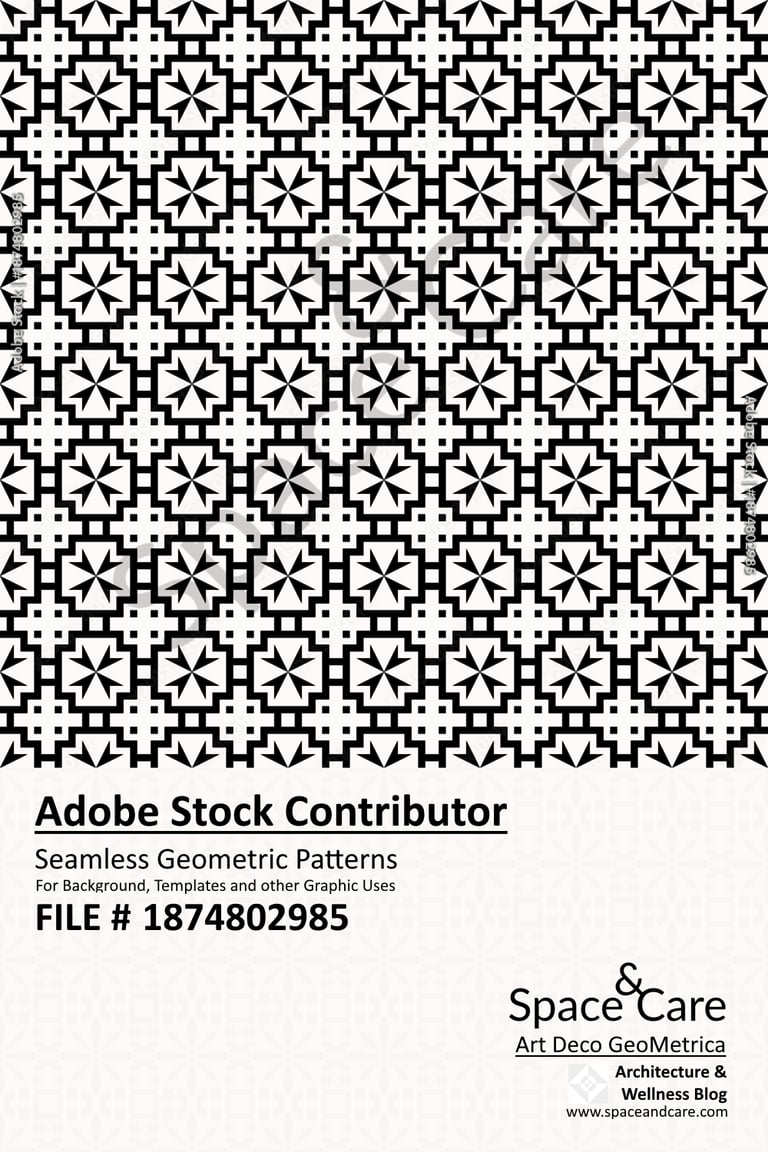
When I either put a symmetrical pattern into a regular repeating sequence or put two different square patterns into a checkered alternating grid in the digital space, new patterns emerge in a macro scale. These new patterns are totally unexpected and unknown even to me, which makes it even more amusing and satisfying to see.
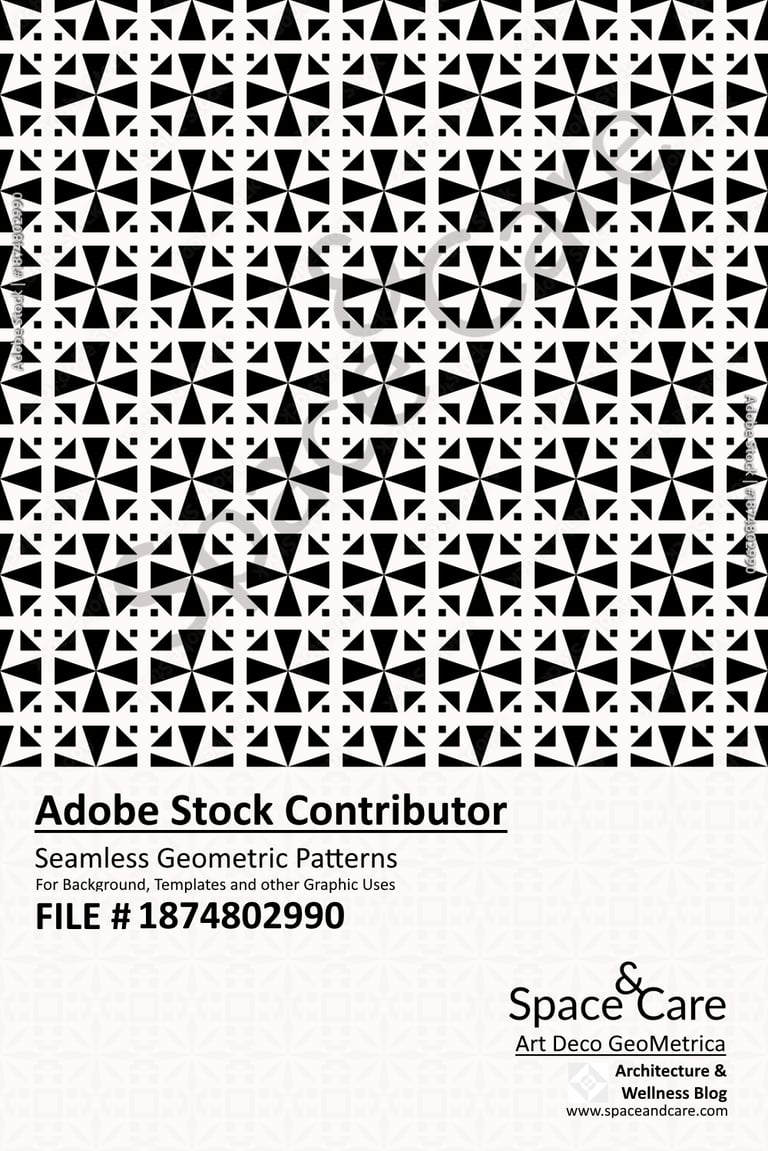
Here is an example of one of these patterns:

This is what it looks like as a singular square tile:
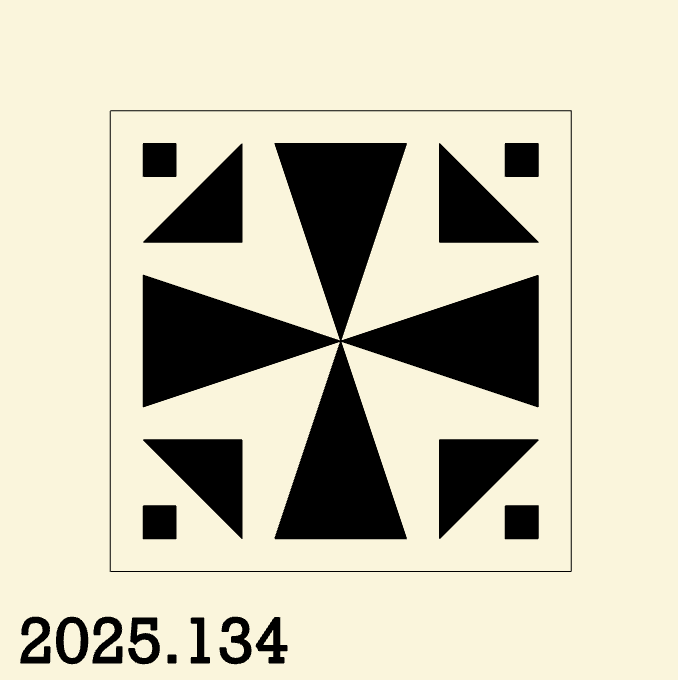
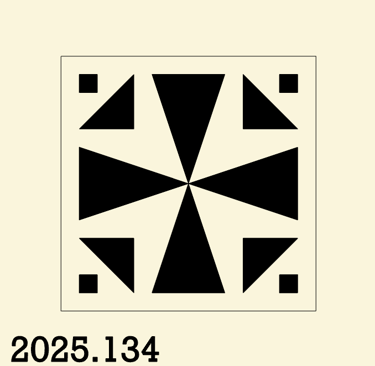
See how, in the original square tile, you are drawn to see the emphasis of the cross pattern and just appreciate the smaller triangular and square elements around it. However, the moment it is in a repeating pattern with itself on all directions, a new pattern emerges; one in which there are hints of a circular sequence, and the smaller triangular and square elements turn into a more focal element, creating its own four-pointed sequence in it.
Another one of my patterns that has this emergent quality is this one:

This one is an example as well: