3 Guidelines for Building Bases in Minecraft
Some thoughts on creating Minecraft builds based on my experience playing the game and my background in architecture. Building a Minecraft base is a little like building real structures in real life: much of it involves planning!
SPACE
Richard Lasam
12/15/20254 min read
Minecraft is a game that I play to relax and have fun, as I mentioned in a previous post. I enjoy building and designing what are essentially mountain fortresses all the time, which in hindsight comes from reading fantasy novels like The Hobbit and The Lord of the Rings. From the descriptions of Moria to Erebor (better known as the Lonely Mountain) and Minas Tirith, the builds I do in Minecraft often reflect structures in Middle Earth that I find inspiring.
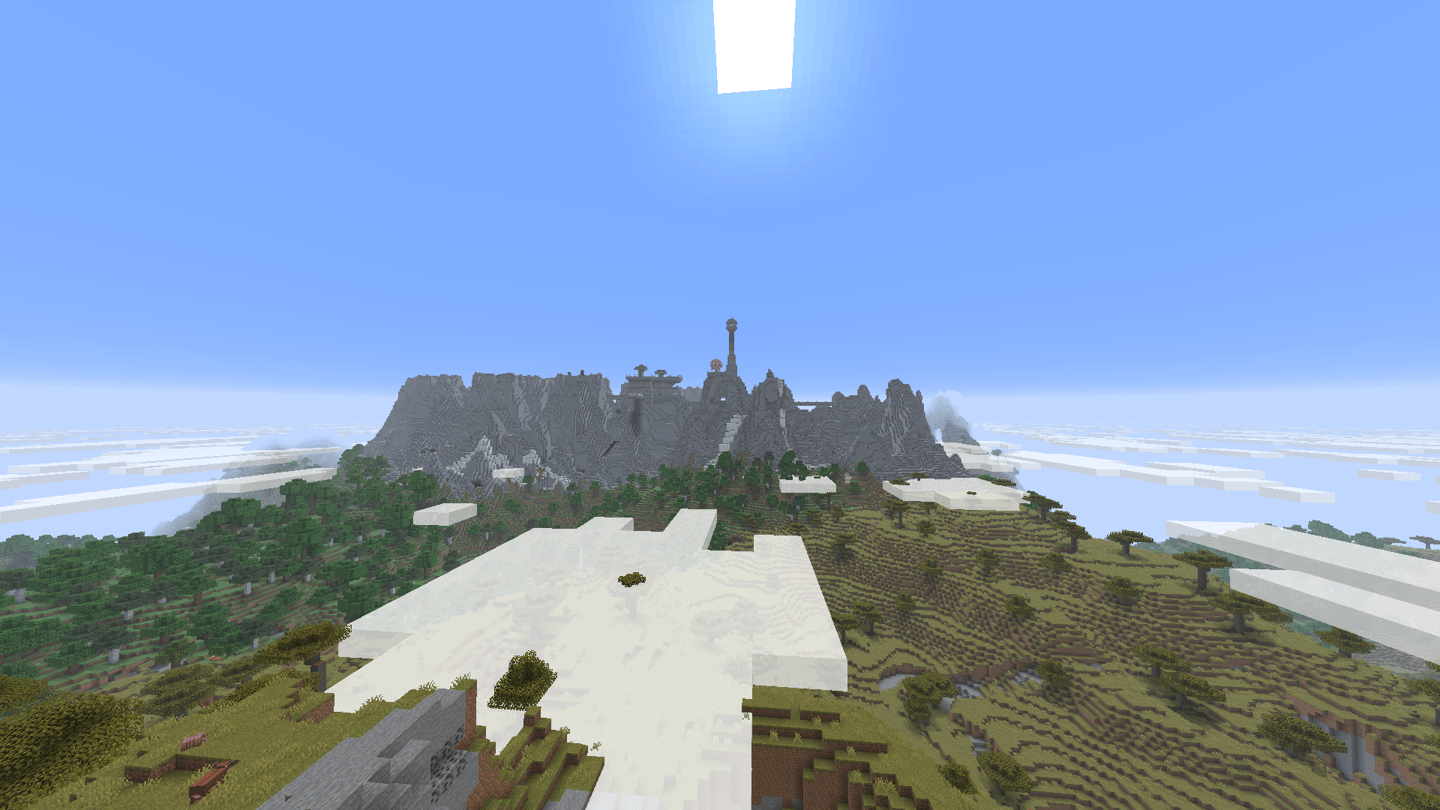
In fact, my current survival world is called “The Lonely Mountain” since I am building my main fortress home on the peaks of an isolated mountain that dominates the landscape. This specific base, though it is called The Lonely Mountain, is more an amalgamation of Erebor (with it being on a mountain) and Minas Tirith (since most of the structure straddles the mountain sides, instead of burrowing into it).
There is just something about how Middle Earth is described by Tolkien in the books that really is visualized splendidly well in a Minecraft World. I even remember a dedicated group of minecrafters recreating Middle Earth in Minecraft! Creations like this, as well as the bases I build, show how much J.R.R. Tolkien has shaped and inspired whole genres and cultures beyond the books—in this case, video games.
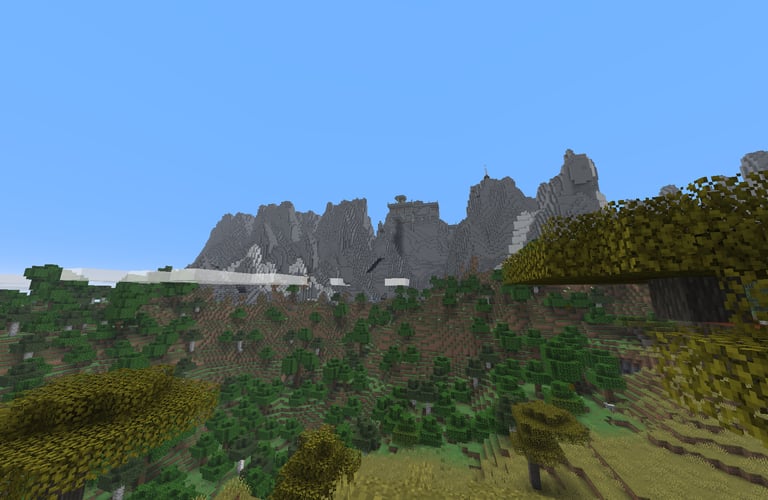
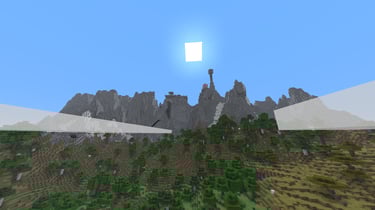
Does not this view give you middle earth vibes?
Since building Middle Earth-style bases requires a certain amount of building foresight and planning, I find the following three guidelines to be very useful in my Minecraft games:
1. Using a modular building system. To keep my base design coherent and workable both horizontally and vertically, a modular system is recommended. For my builds, I often use a 7 x 7 grid as the basic module, which translates to my base having columns every five blocks to allow for plenty of space to put two large chests and a worktable between the columns. The spacing also allows for lighting systems to be close enough to each other to provide proper light levels in the interiors so that no hostile mobs can spawn within the base (an occasional Enderman may wander in though…). This modular system has a clear floor area of about 25 square blocks (depending on how the interior walls are recessed from the columns or not), which allows for plenty of walking space for you and your copper golem friends.
2. Have a general masterplan but leave room for adjustments. My experience with Minecraft builds is that you can easily get bored and tired of a survival world if you plan out a very elaborate base without planning out how to do it in the world, or if it is practical to your base location. Basically, do not be too ambitious in the design of the bases (at least, during the initial stages of the game). What works for me is to just have a general idea of what I want to build (like in the case of my current world, I want a Minas Tirith-type base with elements of Erebor) and slowly build it up in small projects that can be completed in one or two sessions. Having smaller projects or mini goals to complete in the base instead of one giant project helps to keep me motivated to build and design in my current survival world. Another thing to note is to analyze your chosen base site—it is better to work with the land than do terraforming, as doing substantial excavations and land filling in the base can take time that will be tiring in the long run.
3. Keep your building blocks simple and locally sourced. Much like the architectural concept of critical regionalism, it is best to use for a primary building block a simple and easy to collect block within the general vicinity of your base. In my case, it will be stone bricks, since my base is situated in a stony peak biome; there are stone blocks aplenty and a lot of coal to process the blocks and turn the mined cobblestone back to stone blocks. Using harder to source blocks (even with a nether portal network) adds time and complication to building that may impact the fun of your playing experience. I remember one particular survival world I was building where I insisted on transporting sand and sandstone from a desert hundreds of blocks away from my mountain to try and build a base made of sandstone. I got tired of the build less than halfway to my target since it got so cumbersome to build a transport network between the two locations just to keep the building of the base going.
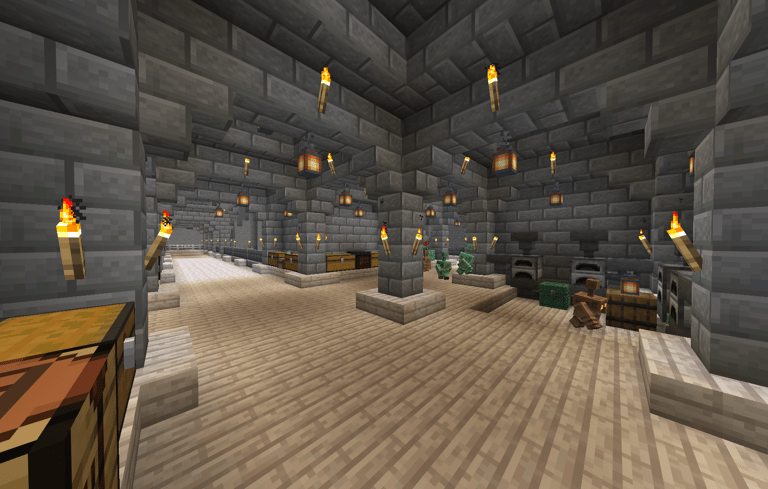
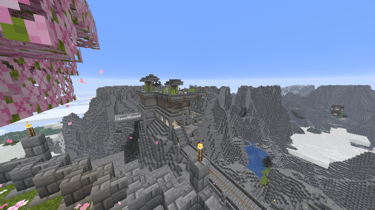
View of the interiors of my base. note the 7 x 7 grid.
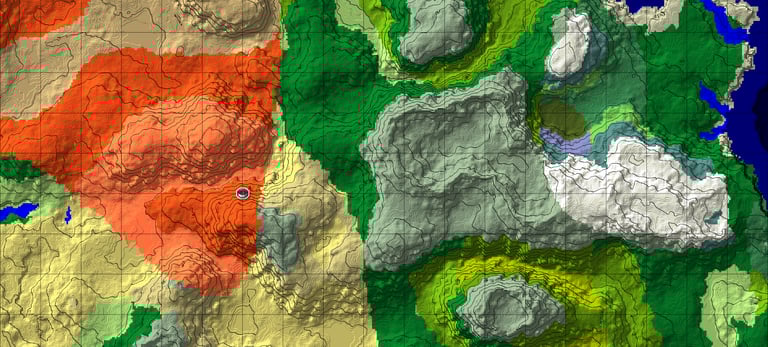
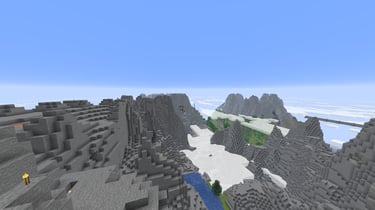
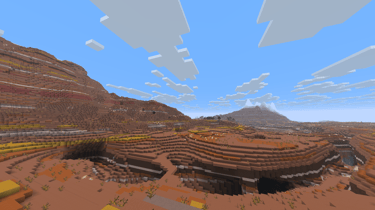
If you want to try the world I am playing at the moment, the seed number is 5555385297882411844. The mountain I used for my base is located at X = 300 Z = 0; the mountain is actually a combined stony peak and frozen peak mountain. Features include a pillager outpost in the middle of the mountain range, as well as a lake that is actually at cloud level. The mountain reaches the height limit for mountains, so it has plenty of plateau on which to build your base. The mountain range is also surrounded by bad lands, pale gardens, jungles, massive caves which reaches into deep dark territory, and plenty of shipwrecks in the nearest ocean biome.
"My experience with Minecraft builds is that you can easily get bored and tired of a survival world if you plan out a very elaborate base without planning out how to do it in the world, or if it is practical to your base location. "